Trust or accountability: why remote teams underperform—and how to fix it
Trust alone is not enough for distributed teams. Learn how transparent, policy-bound monitoring restores fairness without toxic surveillance.
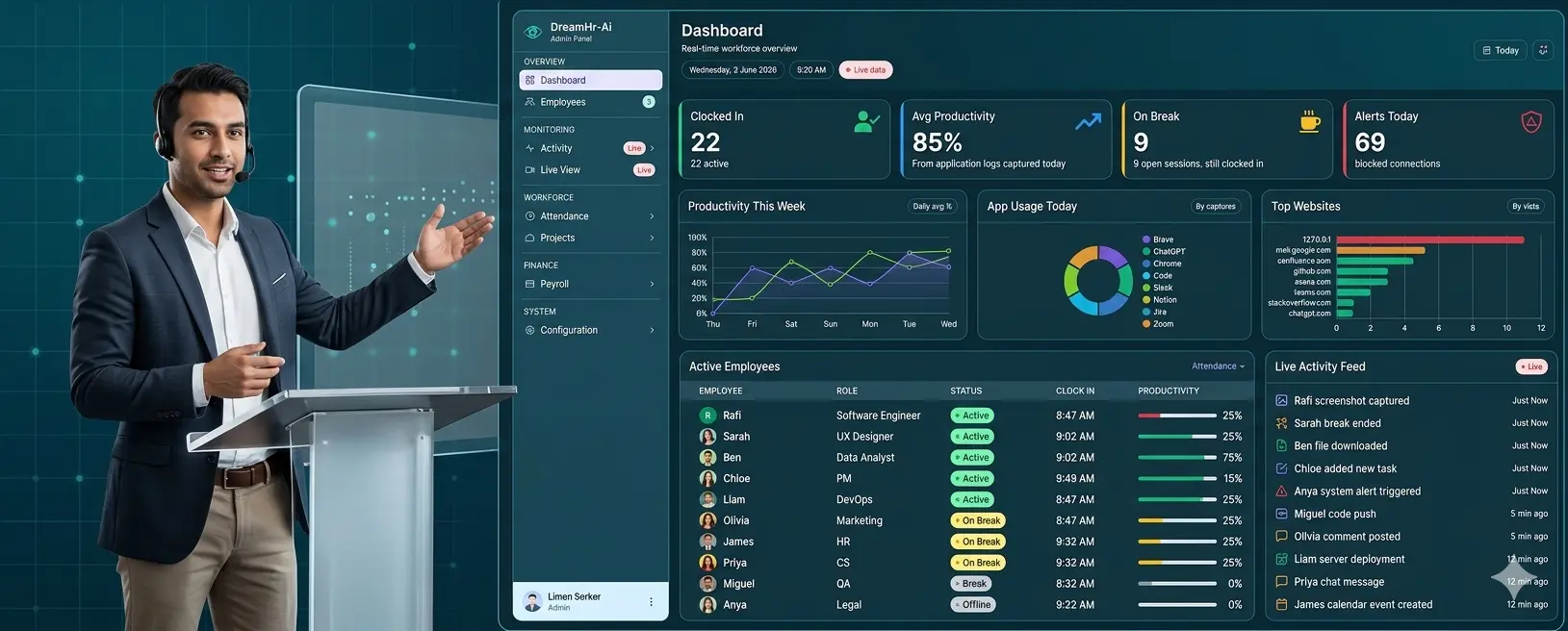
Remote work promised autonomy and flexibility. Many organizations discovered something harder: when nobody can see how work actually happens, accountability gaps turn into missed deadlines, uneven workloads, and quiet resentment between managers and staff.
The fix is not returning to the office by default. It is pairing trust with transparent, agreed-upon visibility—so expectations are clear before anyone opens a dashboard.
Why “we trust our team” often fails
Trust is a cultural value; accountability is an operating system. Teams that rely only on trust tend to reward visible workers, punish the cautious, and discover problems weeks late.
Managers without leading indicators fall back on subjective impressions. High performers feel unrecognized; struggling employees do not get coaching until reviews.
What responsible monitoring adds
Modern workforce tools measure attendance patterns, active time, and goal progress—not always-on webcam feeds. DreamHR-Ai emphasizes shift-aware Live View, productivity scores tied to policy, and employee handbook templates so monitoring is disclosed upfront.
When everyone sees the same numbers, conversations shift from suspicion to problem-solving: coverage gaps, tool adoption, burnout signals, and realistic capacity planning.
Practical steps for 2026
Publish a written monitoring policy. Train managers on coaching with data. Limit Live View to scheduled shifts. Review reports in teams, not as secret scorecards.
Organizations that follow this playbook report fewer disputes, faster onboarding for remote hires, and leadership confidence without surveillance culture.
See how DreamHR-Ai supports your team
Non-invasive monitoring with clear policies—attendance, productivity, and Live View during shifts.