GDPR employee monitoring: compliant features and manager checklist (2026)
A practical guide to lawful workforce monitoring in the EU and UK—lawful bases, employee notice, data minimization, and vendor questions to ask.
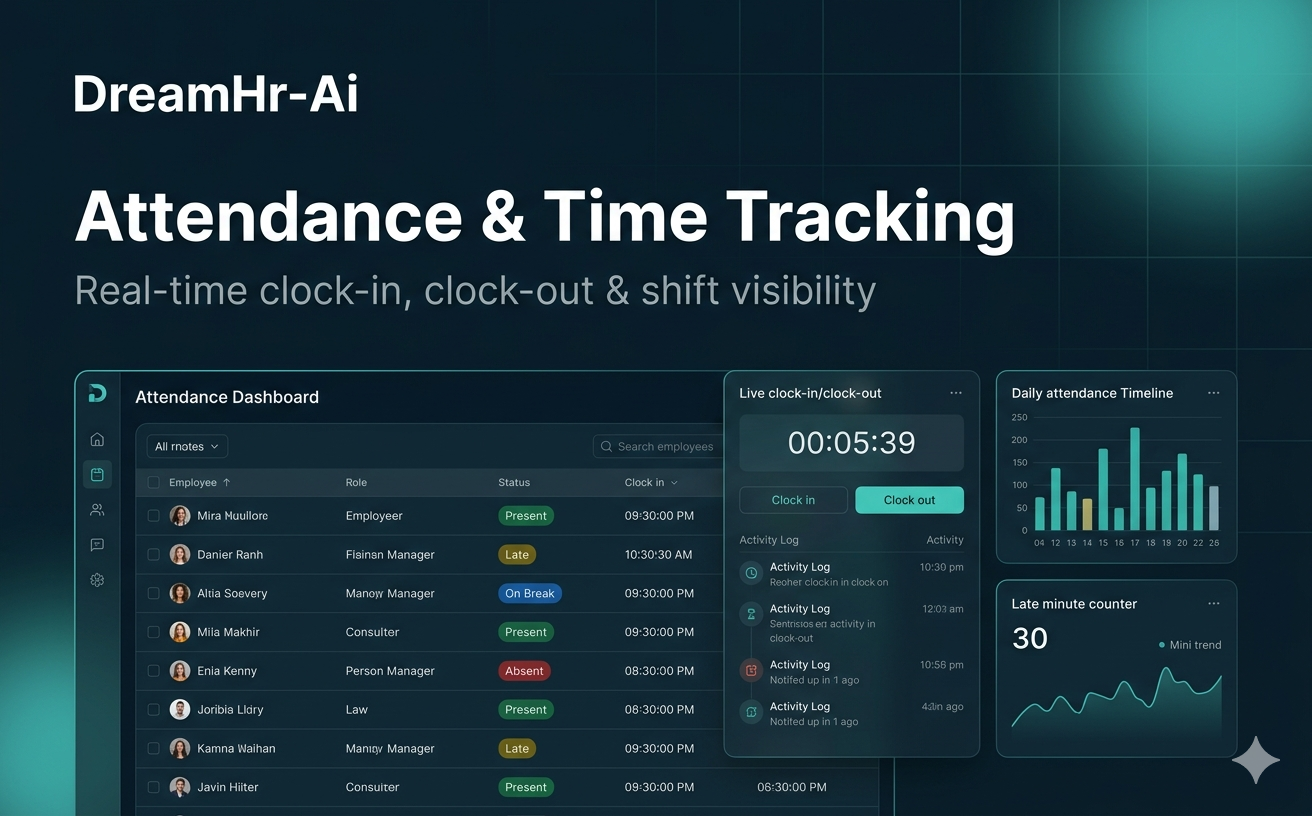
GDPR does not ban employee monitoring—it requires proportionality, transparency, and documented purpose. As hybrid work persists, regulators expect employers to treat workforce analytics like any other personal data processing activity.
Establish a lawful basis
Most employers rely on legitimate interests balanced against employee rights, or legal obligation in regulated sectors. Document the balancing test and consult worker representatives where required.
DreamHR-Ai customers typically pair technical controls (role-based access, retention limits, GDPR-safe mode) with HR policies that explain what is collected and why.
Minimize what you collect
Collect categories needed for attendance, security, or productivity goals—not everything the software can do. Disable invasive options unless a documented risk requires them.
Green-screen productivity reporting and categorized app usage often satisfy managers while avoiding screenshot walls.
Vendor due diligence
Confirm data processing agreements, subprocessor lists, EU transfer mechanisms, and breach notification timelines. Ask how the vendor supports access, correction, and deletion requests from employees via your HR team.
See how DreamHR-Ai supports your team
Non-invasive monitoring with clear policies—attendance, productivity, and Live View during shifts.